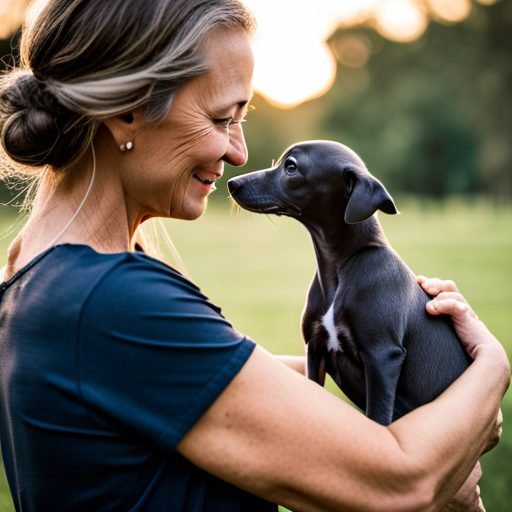
Are you a proud owner of a baby Italian Greyhound? This guide is here to help you navigate the ins and outs of caring for your furry friend.
From ensuring proper nutrition to establishing a routine for exercise and play, we've got you covered.
Learn grooming tips for a healthy coat and discover training techniques for a well-behaved Greyhound.
Plus, find out how to socialize your pup to build confidence and positive interactions.
Get ready to be the best pet parent ever!
The Importance of Proper Nutrition
You should start incorporating a balanced diet into your Italian Greyhound's routine to ensure they receive proper nutrition. A balanced diet provides numerous benefits for your furry friend. It not only promotes overall health and well-being but also helps prevent various health issues. A balanced diet consists of a combination of proteins, carbohydrates, fats, vitamins, and minerals, all of which are essential for your Italian Greyhound's growth and development.
One of the benefits of a balanced diet is maintaining a healthy weight. By feeding your Italian Greyhound a well-balanced diet, you can prevent obesity, which can lead to various health problems such as joint issues and heart disease. Additionally, a balanced diet supports a strong immune system, ensuring that your Italian Greyhound is less prone to illnesses and infections.
While a balanced diet is crucial, some supplements can also play a role in your Italian Greyhound's nutrition. Supplements such as omega-3 fatty acids can support healthy skin and coat, while glucosamine and chondroitin can promote joint health. However, it's important to consult with your veterinarian before adding any supplements to your dog's diet to ensure they're appropriate and safe.
Establishing a Routine for Exercise and Play
When and where can you incorporate exercise and play into your Italian Greyhound's routine?
It's important to provide your Italian Greyhound with regular opportunities for exercise and play to keep them happy and healthy.
Outdoor activities are a great way to fulfill their exercise needs while also providing mental stimulation. Take your Italian Greyhound for walks or runs in the park, allowing them to explore their surroundings and burn off energy.
You can also engage them in games of fetch or frisbee, which won't only provide physical activity but also mental stimulation as they chase after the object.
Another option is to set up an obstacle course in your backyard, with jumps, tunnels, and weave poles to challenge your Italian Greyhound's agility and keep them entertained.
Additionally, consider incorporating interactive toys into their routine, such as treat-dispensing puzzles or hide-and-seek games, to provide mental stimulation even when you aren't able to engage directly with them.
Remember to always supervise your Italian Greyhound during outdoor activities and ensure they've access to shade and water to prevent overheating.
Grooming Tips for a Healthy Coat
To maintain a healthy coat for your Italian Greyhound, regularly brush and bathe them to keep their fur clean and shiny. Brushing is an essential grooming technique that helps prevent matting, which can be uncomfortable for your furry friend. When brushing your Italian Greyhound, use a slicker brush or a comb with medium to long teeth.
Start at the head and work your way down to the tail, making sure to brush in the direction of hair growth. Be gentle but firm to remove any tangles or loose hairs. Pay extra attention to areas like the armpits, behind the ears, and under the belly, as these tend to be more prone to matting. If you encounter any mats, use a detangling spray or a small amount of conditioner to help loosen them before gently combing them out.
Regular bathing is also important for a healthy coat. Use a gentle dog shampoo and make sure to rinse thoroughly to avoid any residue. After bathing, dry your Italian Greyhound thoroughly to prevent any dampness that can lead to skin issues.
Training Techniques for a Well-Behaved Greyhound
Using positive reinforcement techniques, consistently reward your Greyhound for desired behaviors to encourage good behavior and obedience. Positive reinforcement involves giving your Greyhound something they enjoy, like treats or praise, immediately after they exhibit the desired behavior. This helps them associate the behavior with a positive outcome and increases the likelihood of them repeating it in the future.
One effective method of training your Greyhound is crate training. This involves using a crate as a safe and comfortable space for your Greyhound to rest and relax. It can also be used as a tool for house training, as dogs generally don't like to eliminate in their sleeping area. When crate training, it's important to make the crate a positive and inviting space for your Greyhound. You can do this by placing their favorite toys or treats inside, and gradually increasing the amount of time they spend in the crate.
Socialization: Building Confidence and Positive Interactions
You can build confidence and positive interactions in your Greyhound by exposing them to various social situations and rewarding them for calm and friendly behavior towards other dogs and people. Building trust is crucial in creating a strong bond with your Italian Greyhound. By introducing new environments, you can help your greyhound adapt to new settings and build their confidence.
Start by gradually exposing your Greyhound to different people, dogs, and environments. Take them for walks in the park or invite friends with well-behaved dogs over for a playdate. Encourage positive interactions by rewarding your Greyhound with treats, praise, and affection when they display calm and friendly behavior.
When introducing your Greyhound to new environments, start with low-stress situations and gradually increase the level of difficulty. This could involve taking them to busier parks or introducing them to crowded areas. Always ensure that your Greyhound feels safe and secure during these experiences.
Consistency is key when socializing your Greyhound. Make socialization a regular part of their routine, and don't be afraid to seek professional help if needed. Remember, a confident and well-socialized Greyhound is more likely to have positive interactions with other dogs and people, making them a joy to be around.
Frequently Asked Questions
How Can I Prevent Separation Anxiety in My Italian Greyhound?
To prevent separation anxiety in your Italian Greyhound, try these effective strategies and training techniques. Experts recommend gradually increasing alone time, using positive reinforcement, and providing mental and physical stimulation.
What Are Some Common Health Issues That Italian Greyhounds Face?
To prevent separation anxiety in your Italian Greyhound, make sure to provide plenty of exercise and mental stimulation. Additionally, managing their energy levels can help reduce anxiety. Some common health issues in Italian Greyhounds include dental problems, allergies, and patellar luxation.
How Can I Ensure That My Italian Greyhound Is Getting Enough Mental Stimulation?
To ensure your Italian Greyhound gets enough mental stimulation, engage in enrichment activities like interactive play sessions and provide puzzle toys. These activities will keep their mind active and prevent boredom.
What Are Some Tips for Managing the High Energy Levels of an Italian Greyhound?
To manage your Italian Greyhound's high energy levels, try these tips. Engage in regular training sessions to keep them mentally stimulated. Play fun activities like fetch or agility to tire them out.
How Do I Choose the Right Veterinarian for My Italian Greyhound?
When choosing a veterinarian for your Italian Greyhound, consider their experience with the breed and their approach to separation anxiety prevention. A vet who understands your dog's specific needs will provide the best care.
Conclusion
In conclusion, by providing your Italian Greyhound with proper nutrition, regular exercise and play, grooming care, training techniques, and socialization opportunities, you're ensuring a happy and healthy life for your furry companion.
Remember to always prioritize their well-being and make them feel loved and cared for.
With your dedication and attention, your baby Italian Greyhound will thrive and bring joy to your life for many years to come.


